I’m always on the lookout for new pieces in my home: something special but also subtle. Lately I’ve noticed that there is a trend in kitchenware and homeware: stainless steel. From champagne coolers through trays to vases, there’s always something new, something out of the ordinary that catches one’s eye. I’ve gathered some items for you that might catch your eyes as well.
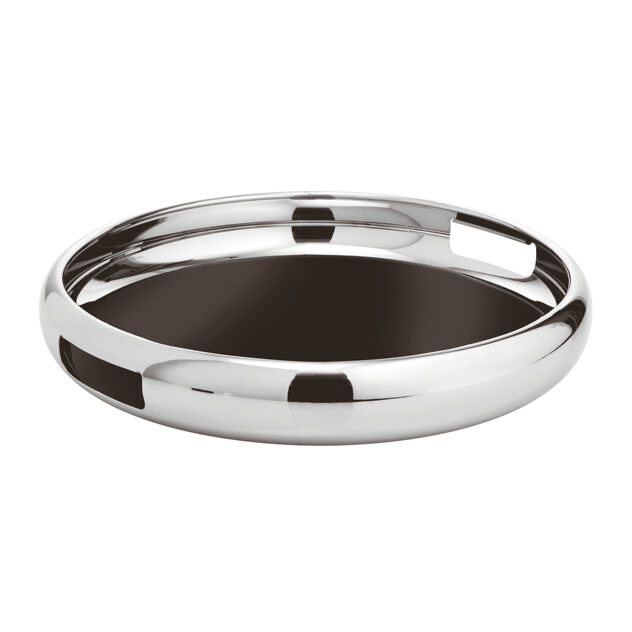
store your liquors on this lovely tray just on top of your cherrywood console table, or serve your jacket potatoes straight out of the oven on parchment paper on this beauty and the shiny stainless steel will go with every other ceramic or earthenware plate you might have.
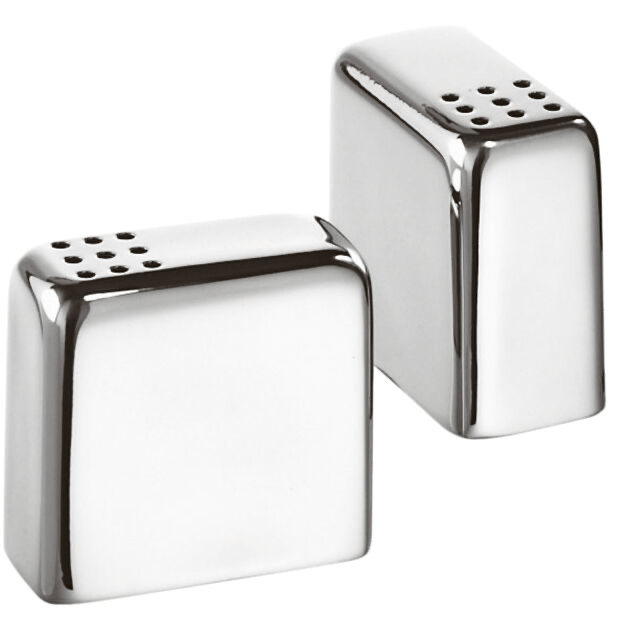
although I usually prefer those salt and pepper mills that many brand offers in pair and similar colors, this is a fun alternative that reminds me of weird little dices that were somehow shaped by Dali’s out of the world forms.
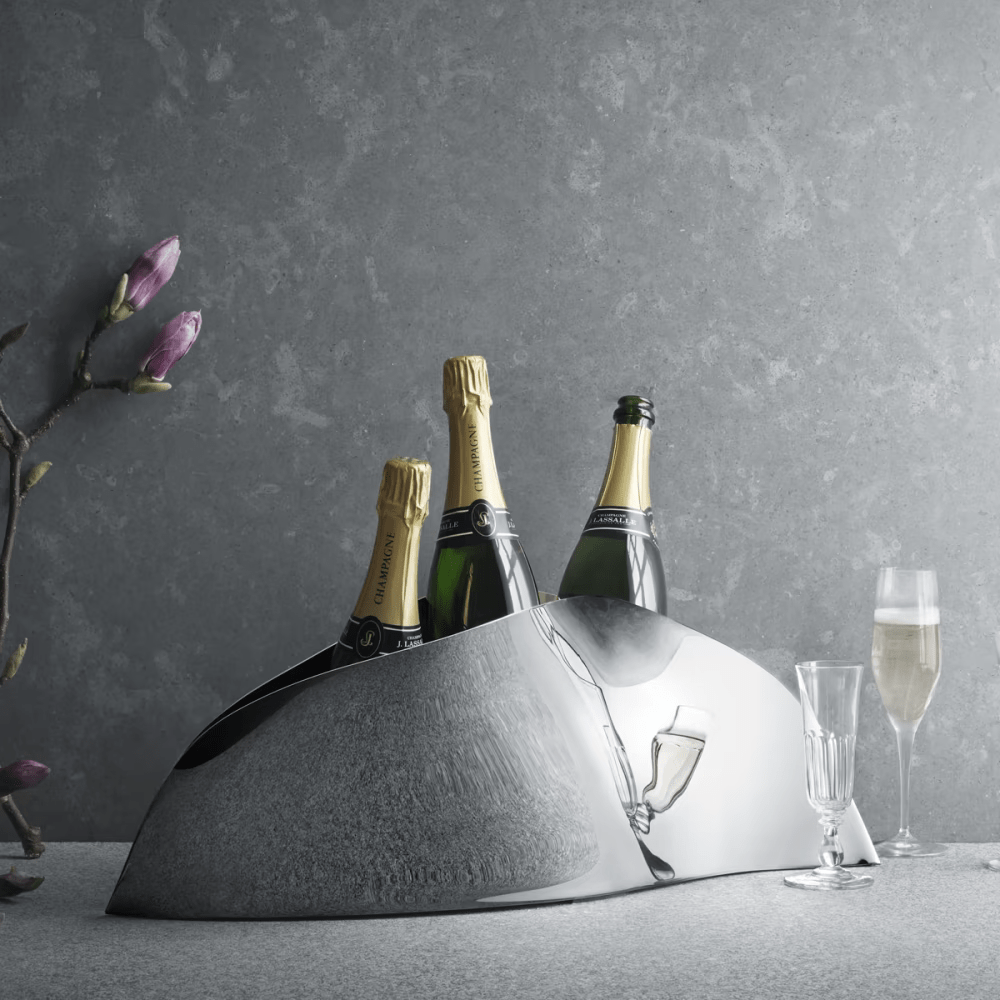
Danish jewellery design Georg Jensen really turned champagne/wine bottle coolers into a whole another level. with chic and wavy forms this will absolutely wow your guests upon placing it in the middle of your dinner table on a Saturday evening. with champagne/wine coolers there’s always an issue that they’re difficult to handle: a lot of water included, huge weights, etc. this one seems a tad easier to handle and on top of that will look 100% better than anything else on the market. there’s also a one bottle version of it that looks just as cool, but everybody knows one bottle is not enough for a gathering on a Saturday evening.
minimalist Danish design wins again. champagne can be re-corked easily with these and you won’t have to worry about breaking them unlike with those plastic ones that’s frequently on the market.
…and it wins again. these vases nicknamed ‘BLOOM BOTANICA’ come in three sizes (small, medium and large) making them perfect for every type of flower you can think of: just something your children gathered in your garden or something grandiose like a huge bouquet of intensely fragrant white lilies.
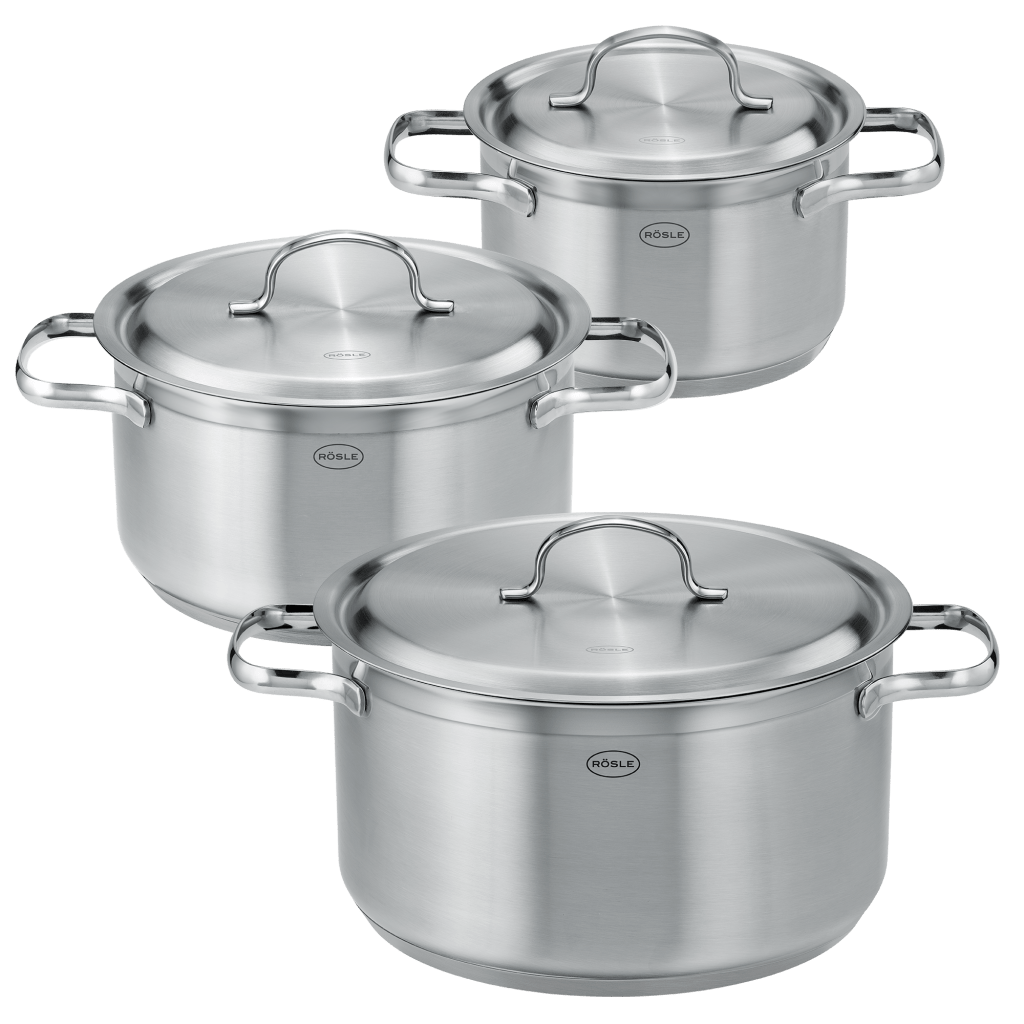
German manufacturer Rösle makes amazing cookware that will last ages and will also help you in preparing amazing food. this cookware mixes functionality and design: they are easy to clean and maintain and reasonably priced, therefore you cannot go wrong with it.
the compressed design can elevate your kitchen countertop filled with fresh cherries in the middle of June, but I can also see it on the dinner table serving huge slices of sourdough bread, baked at home.
we now have Italian, German and Danish designers in the list, and it would be a mistake from my end not to include the Dutch designer house of soos atelier, namely this beautiful coffee set piece. enjoying your morning cappuccino would elevate your mornings, not only because the design is flawless, but as I pointed out already previously, it’s easy to maintain and probably will last you a lifetime. beautiful and minimalistic, nothing loud here.
(10) ice cream / olives / anything else cup by soos atelier
with the scorching heat firing through europe you will be needing some gelato for sure. lately I’ve been eyeing the art of making a gelato for quite some time now, and I already picked a gelato making machine with a built in compressor that I might write an article about, but serving gelato in a nice cup is just as important as the ingredients in the gelato. with these stainless steel cups you will be able to serve them effortlessly.
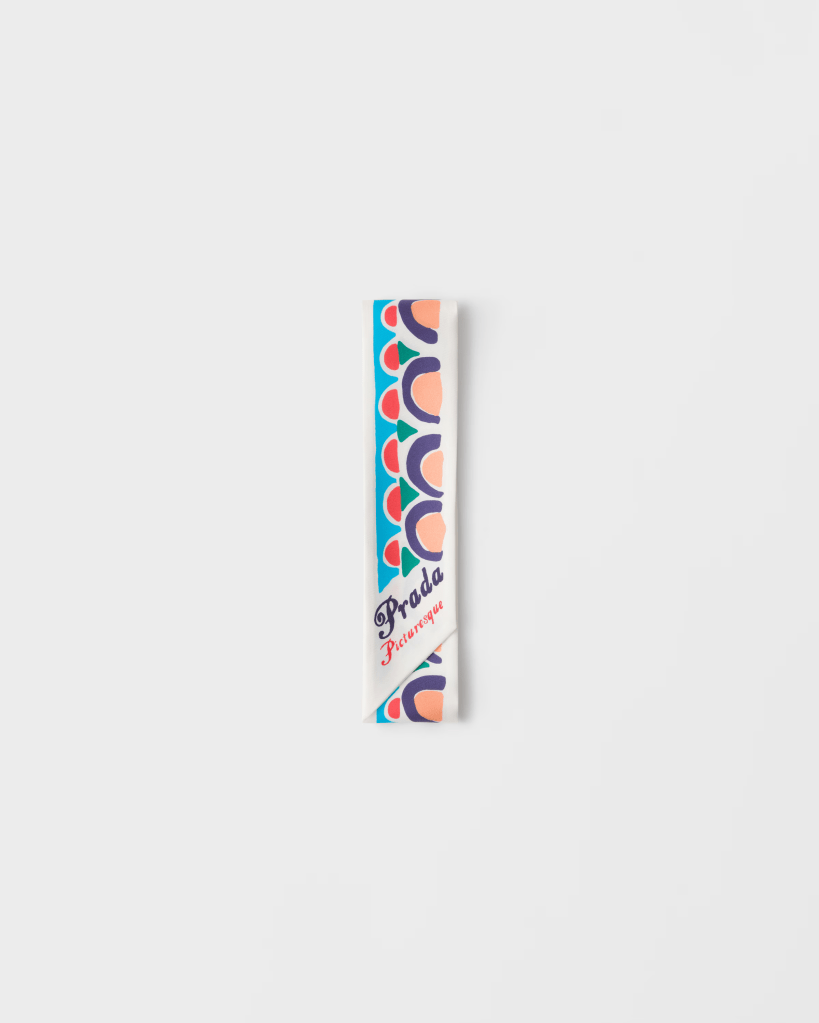
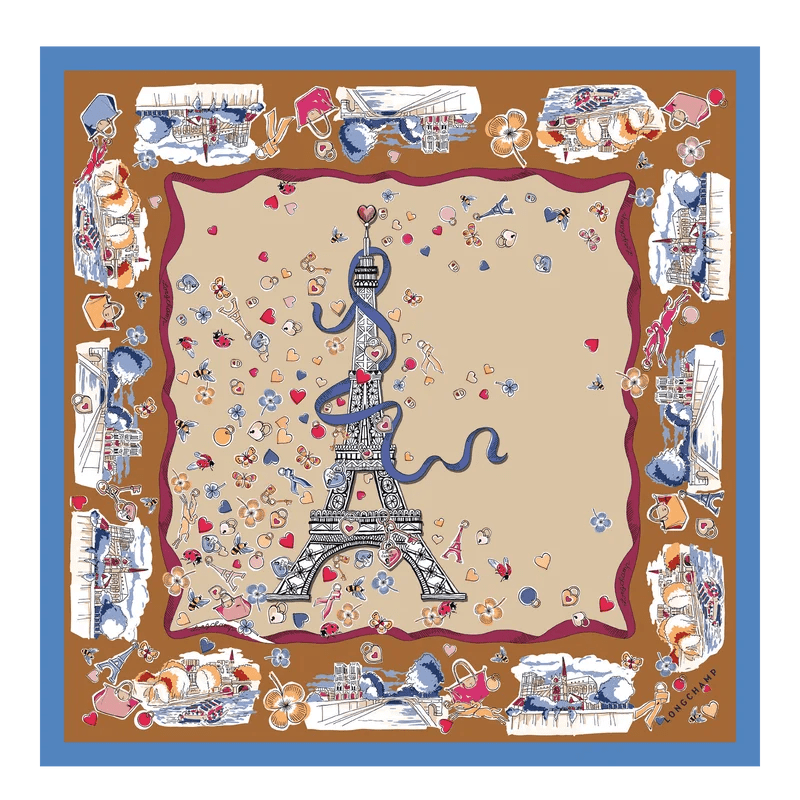
this skinny silk scarf is those who dare: with its bright colors you can simply tie a knot on your bag or on your neck and with an espresso in your hand, it’s a summer in Portofino already.
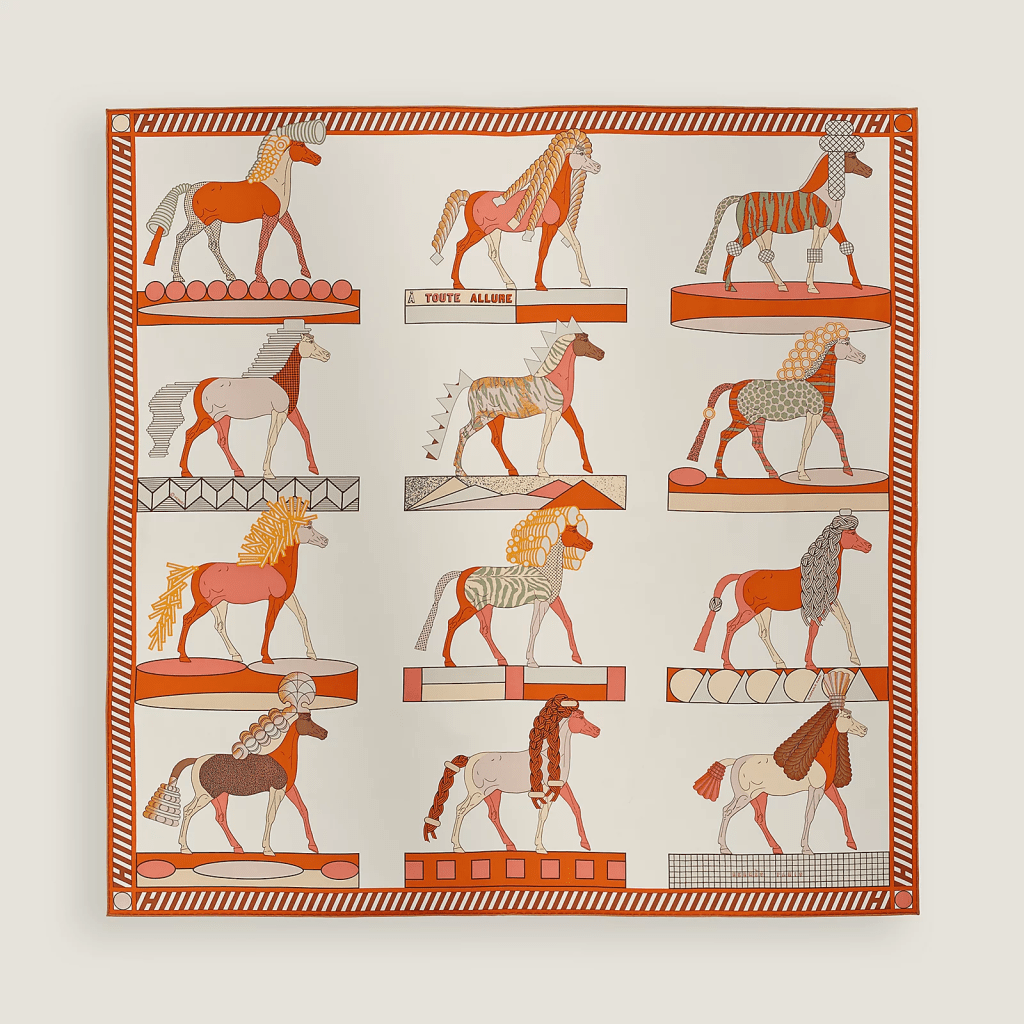
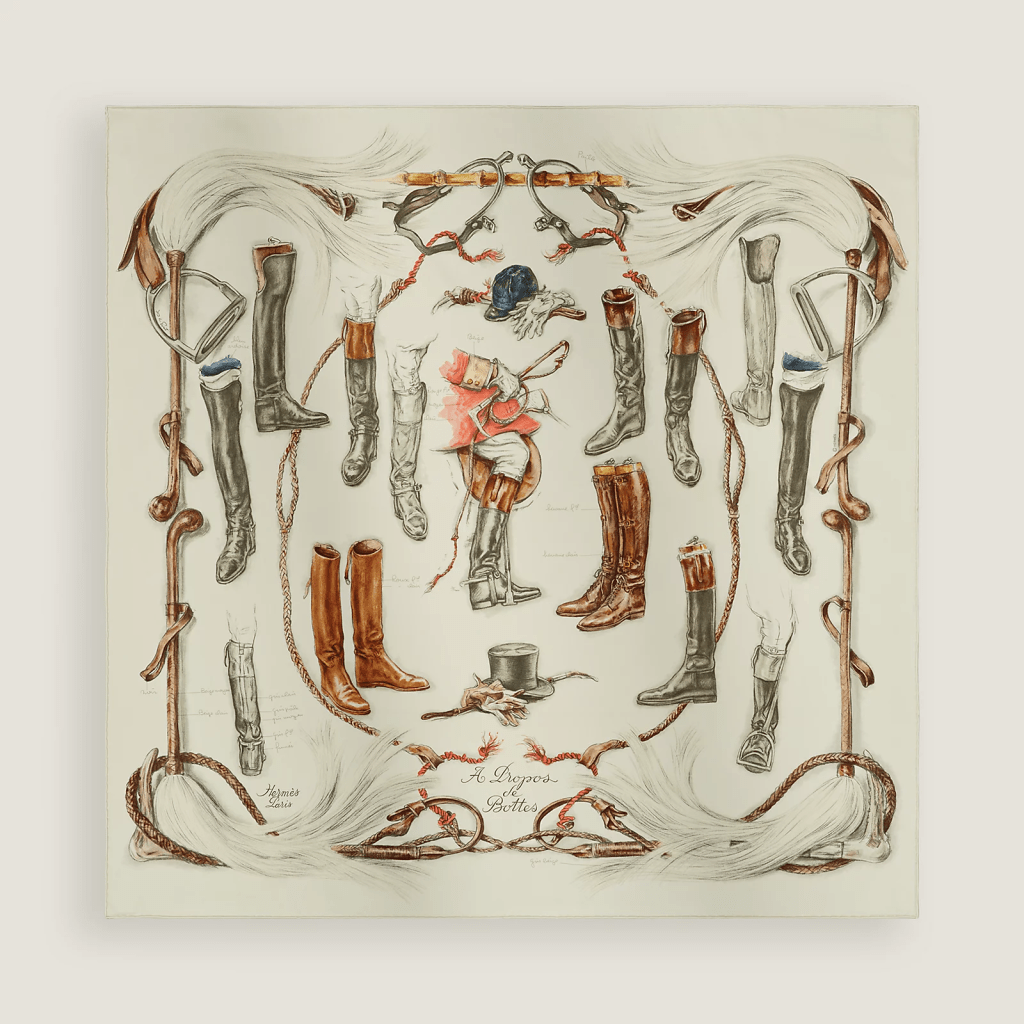
equestrian style done in a modern sense: the king of silk scarves is present. with the funky hair of horses and a symmetrical design it’s not to be missed this season.
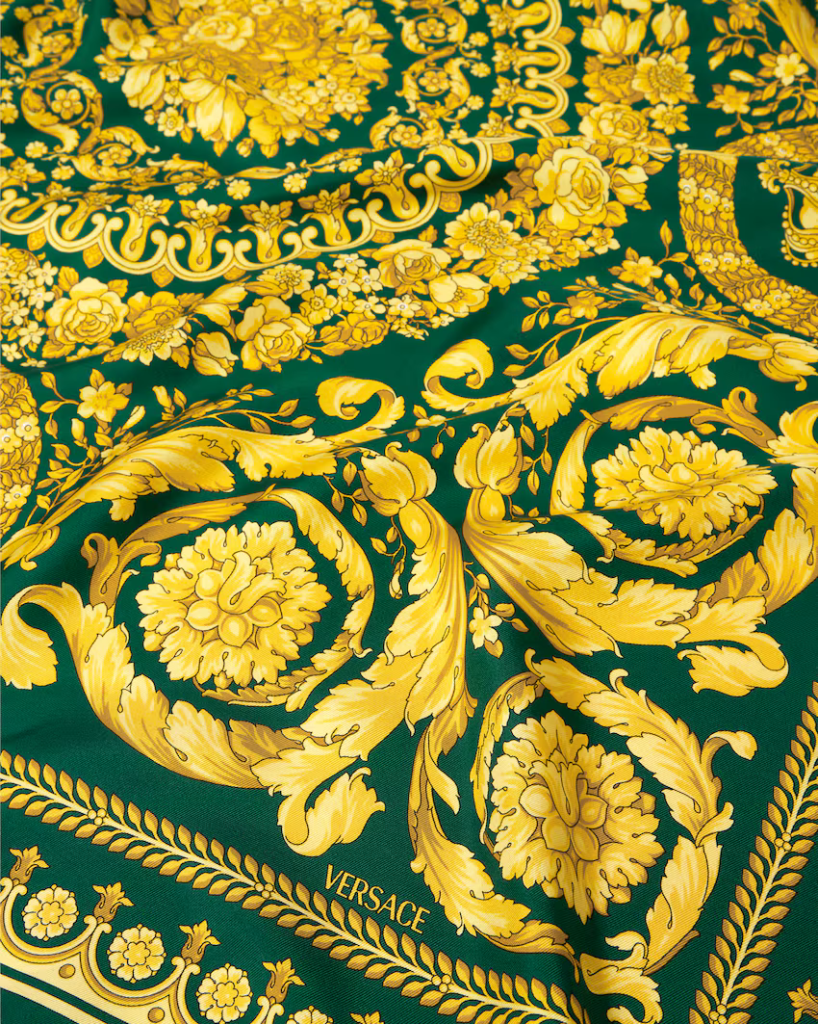
molto eccentrico as the Italians say. this printed silk twill contains Versace’s signature print that’s full of greek inspired barocco motifs. pair it with denim, or a white shirt and although it will be eccentric, the silk twill will impress everyone.
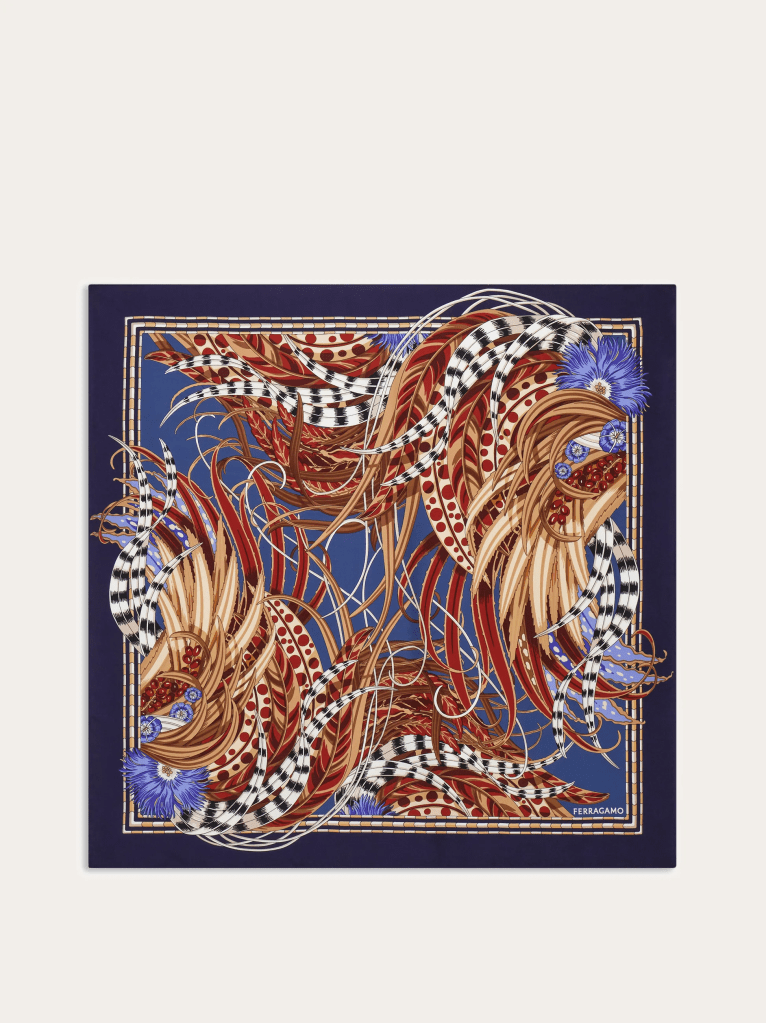
silk’s beautifully saturated and vibrant colors shine through Ferragamo’s silk scarves. looking through their catalog I was impressed by the designs and how bravely they use their prints on these impressive canvases.
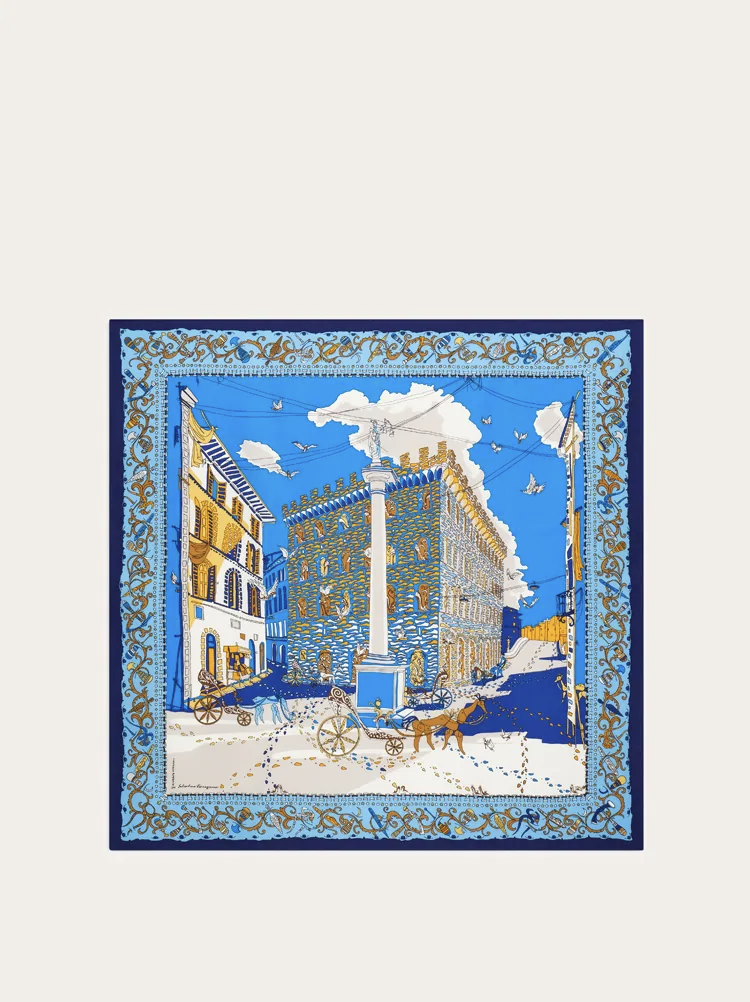
another example of the beautifully vivid colors from ferragamo’s collection. on the print we can see Palazzo Spini from Florence, Tuscany where ferragamo is currently headquartered.
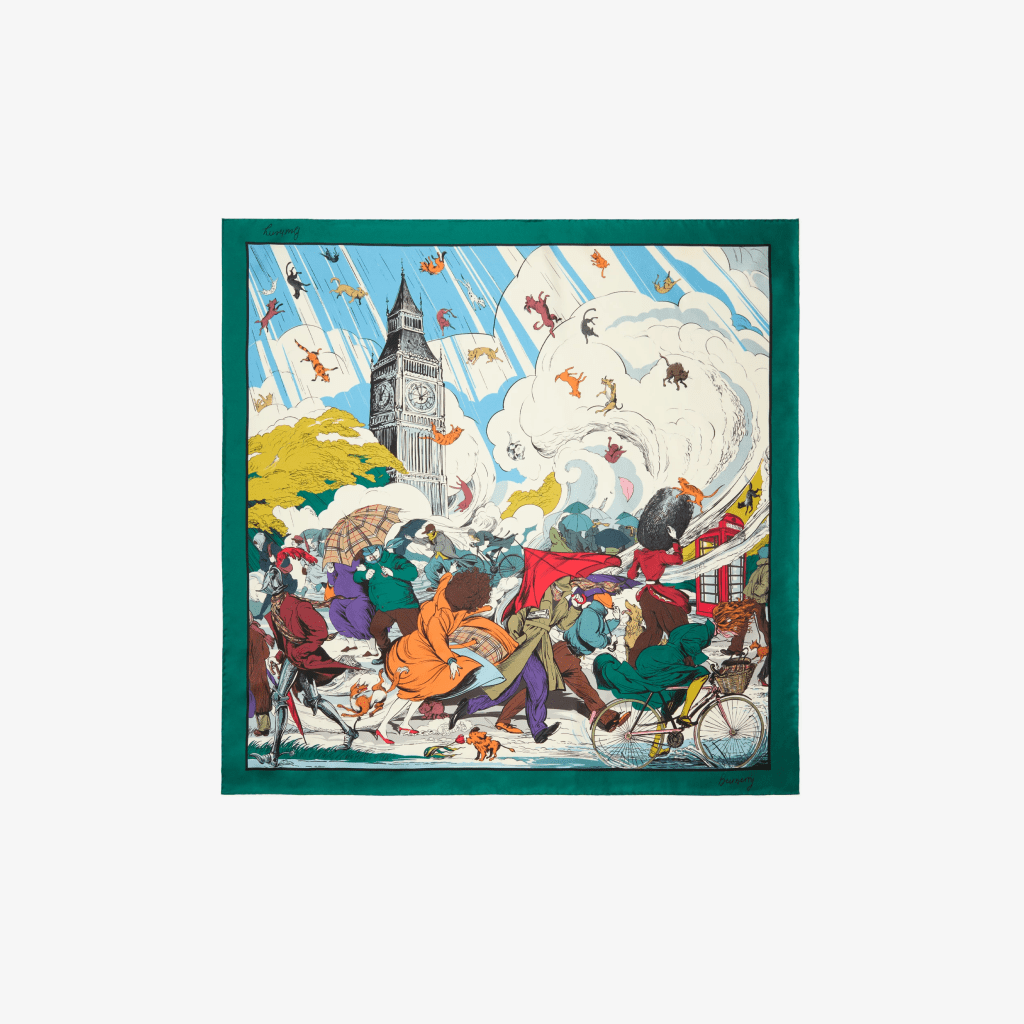
although the house used to be Britain’s elegant giant with its iconic trench coats, currently it is struggling to find its way into fashion’s world. still, the team dealing with the designs of their silk scarves are doing an amazing job lately as I could easily pick 3 or 4 items from their line up. the designs are bright and loud with funky elements such as this one that’s named “raining cats and dogs”.
I thought that I would base my first post off something that’s linked to both (i) masterful crafts, (ii) arts and of course (iii) trade and commerce.
Silk denotes many things at once, therefore we need some clarification first. First and foremost, silk is actually the secretion of many insects, including spiders, caterpillars and some mollusks, even. But silk is also a fabric, that is made specifically from the secretions of the caterpillar called bombyx mori, that feeds on the leaves of mulberry trees, especially white ones (morus alba). Although they can also feed on other types of mulberry tree leaves, such as black mulberry tree leaves, unfortunately this results in coarser silk threads1
Silk dates back to 2700 BCE2 China, although wild silk remains have been found in modern day North India as well. This means that the Chinese have managed to domesticate the insect first out of anyone, building a whole business around the production of it. It is most likely that the moth called bombyx mandarina was domesticated into the bombyx mori. The domestication made the cocoons ten times heavier than originally the mandarina had, resulting in longer fibers3. The domestication also resulted in the bombyx mori incapable of flying and completely reliant on the help of humans:
“On the way to becoming domesticated for human use, captive mandarina moths lost their color camouflage, any fear of predators and humans, and, with only vestigial wings remaining, the ability to fly. It became sluggish, clumsy and blind.”4
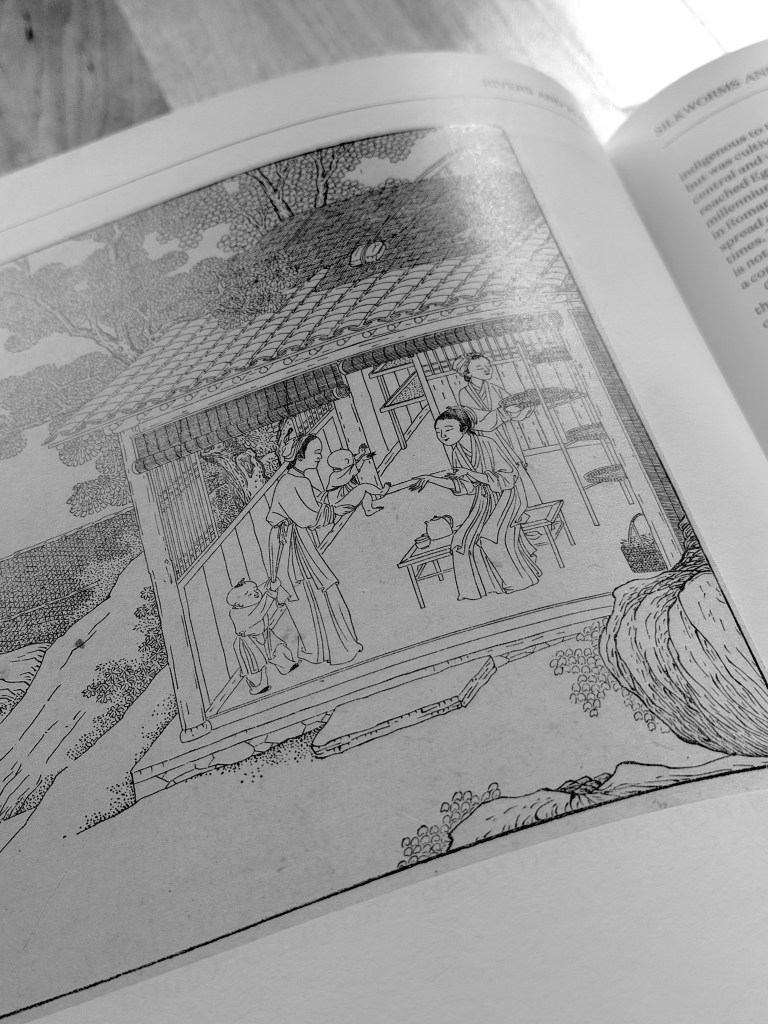
The production of the fabric is so labour intensive that it includes feeding the caterpillars with shredded mulberry leaves in the first few days nearly every two hours. The tiny insects need to be maintained properly as any excess moisture or fecal matter may help them to develop diseases. On top of the feeding and regularly maintaining the caterpillars, the fully formed cocoons had to be put into hot water so that the caterpillars were killed before they could actually emerge, thus making a hole in the cocoon that results in worse quality silk. After putting them in hot water, the cocoons could be rolled up into one singular thread (reeling, which is considered the highest quality silk, the opposite would be wild silk production where the the cocoon cannot be unrolled into one single filament/thread), the length reaching as long as 900 meters. Threads are then rolled into yarn, which are then weaved into fabric, which could be chiffon or twill, which basically means how and in what shapes the threads have been woven into a fabric. The hot water is also needed to get rid of the glue (called sericin) produced by the bombyx mori that holds the cocoon together.
“skill and experience, especially in relation to making objects; a job or activity that needs skill and experience, or something produced using skill and experience”
When it comes to the silk production of the Chinese (although quite an anachronistic term) I believe it was a masterful craft from the beginning. Silk production is so labour intensive that a simple silk scarf or a chemise was one of a prized possessions a person could own, and still is, due to its great qualities: it glides on the skin, it keeps you warm in the winter and cold in the summer, it’s a very light material (try measuring your silk pajamas on your bathroom scale) and the colors the material reflects, is very saturated and vivid.
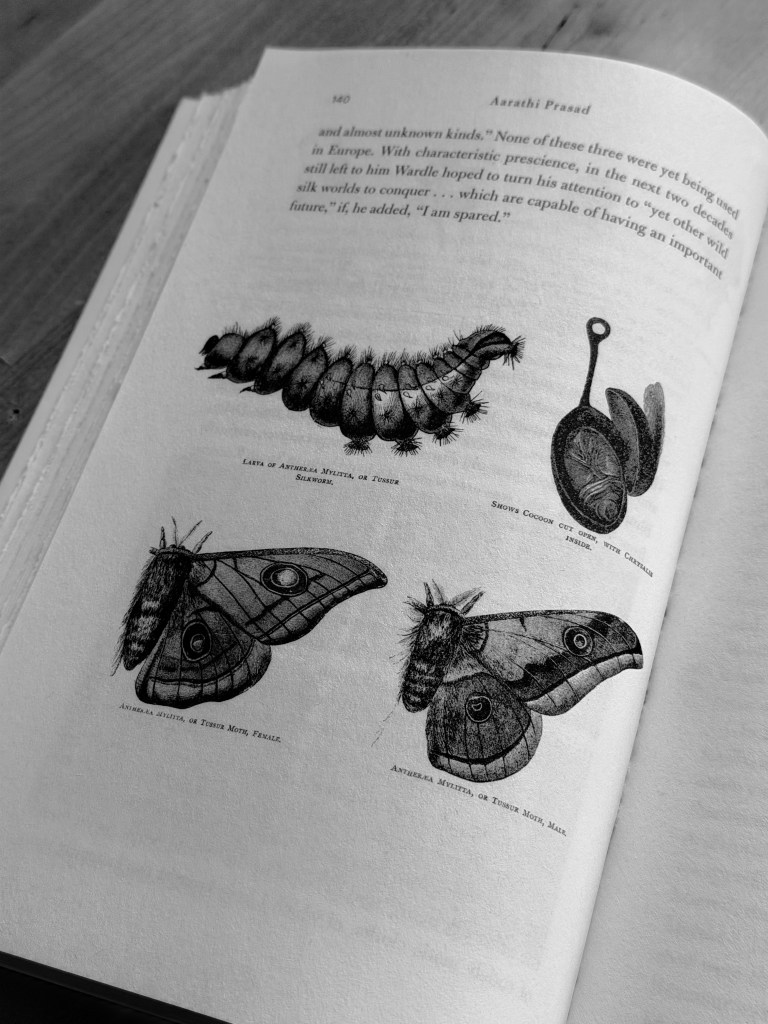
European silk houses where silk production was taking place in the 17th and 18th century did face problems with the domesticated bombyx mori, as they were held in captivity they were starting to show symptoms of being inbred. Moths became ill and silk production decreased. In the meantime, in discoveries in India, another moth was being inspected for silk production purposes, namely the antheraea mylitta, or, tussar silk moth. The tussar silk was a different silk than the regular silk produced by the bombyx mori, it was more difficult to dye in the beginning and was coarser than the silk of the bombyx mori. Its qualities were of similar sort: easy to wear, highly breathable:
“It was true that a strand of tasar (sic) was coarser than one of bombyx mori silk – 1/750th of an inch in diameter, according to Wardle’s notes, compared to 1/2,000th of an inch for bombyx. But that difference made it just as valuable, because that thickness contributed to its remarkable strength and durability (…).”5
(c) Prasad, Aarathi. Silk: A world history. Harper Collins. 2024.
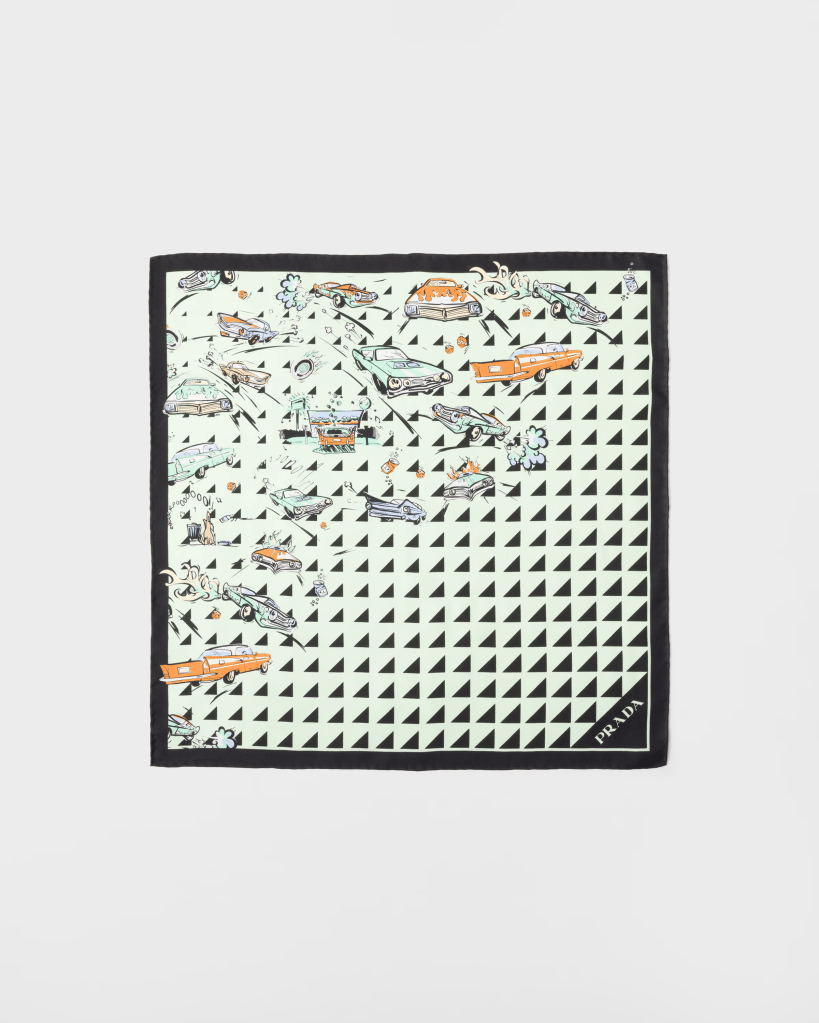
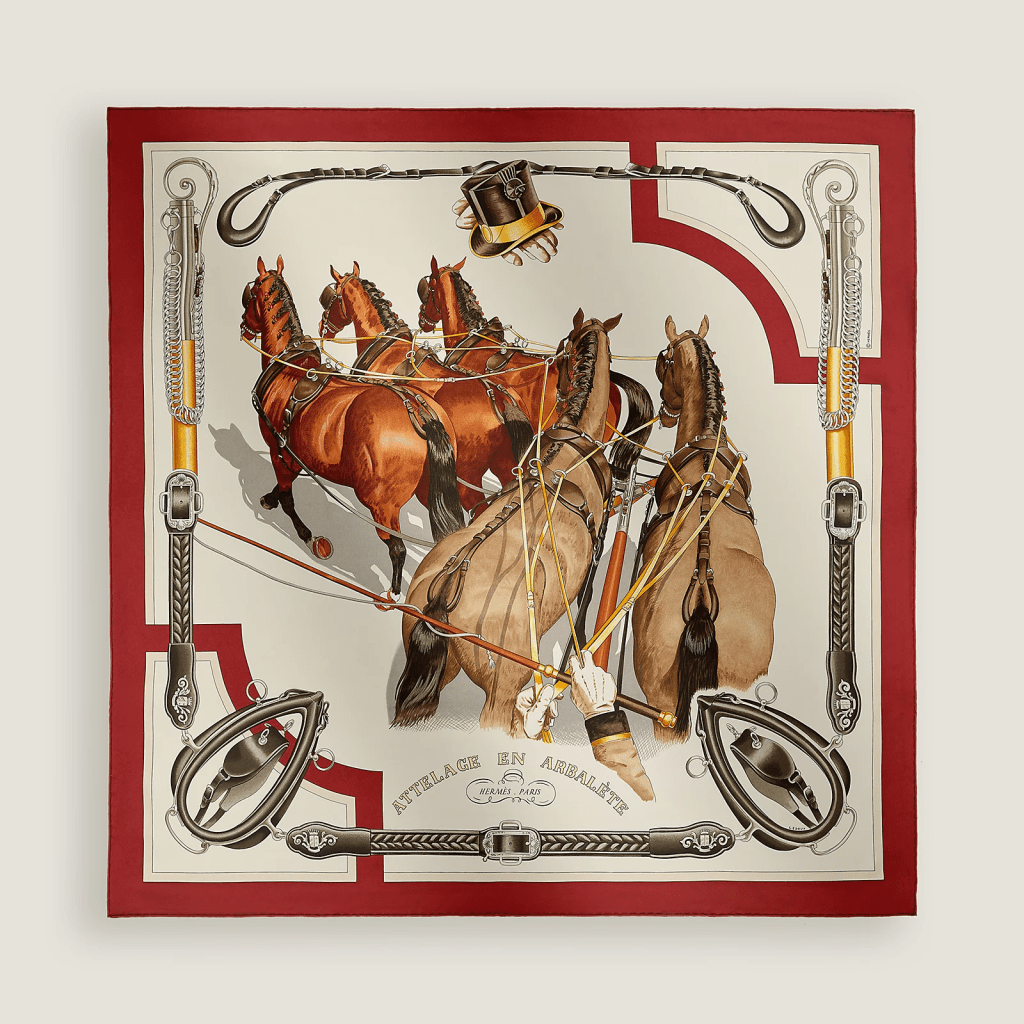
Tussar silk is still being produced in Jharkhand, India, just north of Kolkata on the eastern coast bordering Bangladesh. As a cheaper version due to the not so selective diet of the moth, it’s a great alternative to the bombyx silk that’s used for scarves, pyjamas and other luxurious garments. A particular garment that caught my attention from early on were scarves, everyone knows the highly spectacular Hermès scarves that’s being rolled out on an annual basis with special designs that are part of their limited edition sets. Other fashion houses such as Gucci or Prada also have delicate silk scarf designs – although not as iconic as Hermès’ – either in a 50×50 or 90×90 layout or just in a simple twilly form that’s a longer and narrower style of a scarf. I’ll definitely base my next article on these items, as some people just hang them on their walls stretched out like a piece of art.
In the beginning of the present article I mentioned that although the silk moth is usually the insect that we think of when someone mentions silk, there have been other attempts at producing similar materials. One of them is related to the Mediterranean coast of Europe, where a huge mollusk named Pinna Nobilis was used to harvest its silk. The mollusk attaches itself to the seafloor by having long and durable “hairs” and it lives its entire life this way. In many mummified noble corpses’ coffins, gloves were found woven from sea mollusk silk, a brownish-golden material that’s extremely rare as the hairs the mollusks produce are limited. Originally, these types of mollusks were abundant on the seashores and the flesh of the mollusk was also eaten, however in the recent years the Pinna Nobilis entered IUCN’s red list status and therefore is critically endangered as of now.
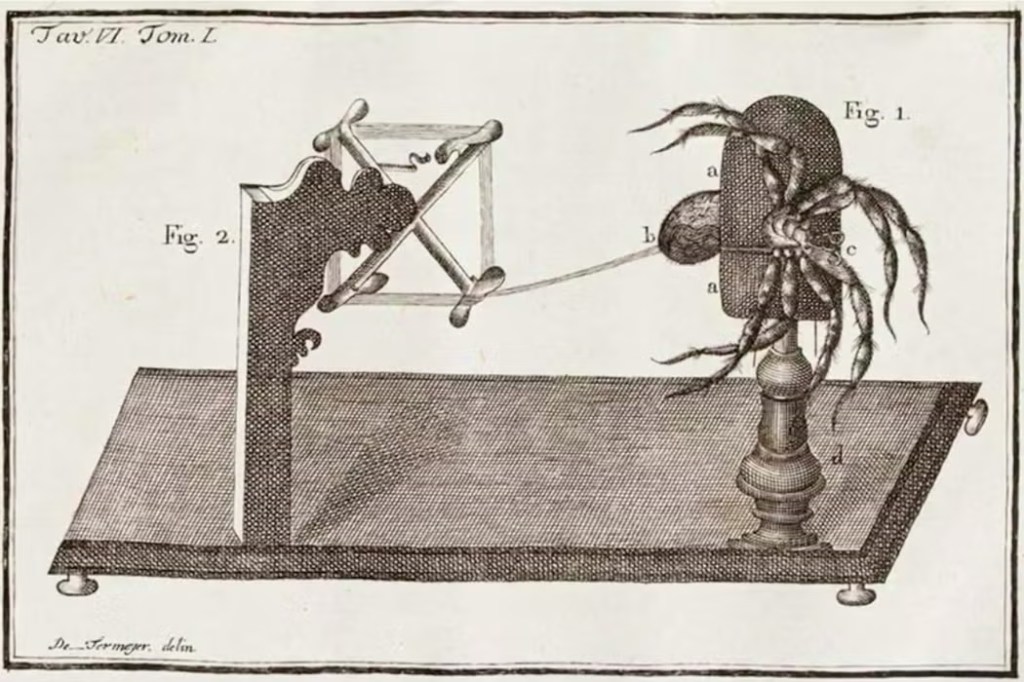
Other animals that have been used for similar purposes are spiders. The French were eager to find a new silk that’s more profitable and easier to produce than the traditional silk of the bombyx mori. French naturalist, Bon de Saint Hilaire conducted research by asking his neighbours to collect spider egg sacks that were woven with spider silk. The egg sacks turned out to be difficult to get the silk from so later on another device was invented by another French naturalist, Paul Camboué who discovered the golden orb weaver spider (the genus of Nephilia) on his trip to Madagascar. This device used the live spiders to get the silk from their abdomen, named “guillotine” after the infamous execution apparatus.
(c) Victoria and Albert museum.
The device and harvesting silk from the golden orb weaver turned out to be a bigger success than the silk of the Pinna mollusk, as there are many garments made out of them currently displayed in museums, such as the Victoria and Albert in London. Harvesting the silk from the spiders are still tricky, since the animal needs to be alive during the process unlike in the case of the bombyx where the fact that the caterpillars are killed and the silk can still be obtained makes it an easier process.
So many silks to find, and to produce, however bombyx silk is still king. I find this material one of the most luxurious ones and with the intricate designs that are found in many places throughout the world, it’s one of my crazed addictions to see and feel as much as I can. Through scarves and pyjamas and bathrobes, bedding and pillow cases, there is always something to look out for to elevate your home collection.





 the weekly report for the aesthetically curious